

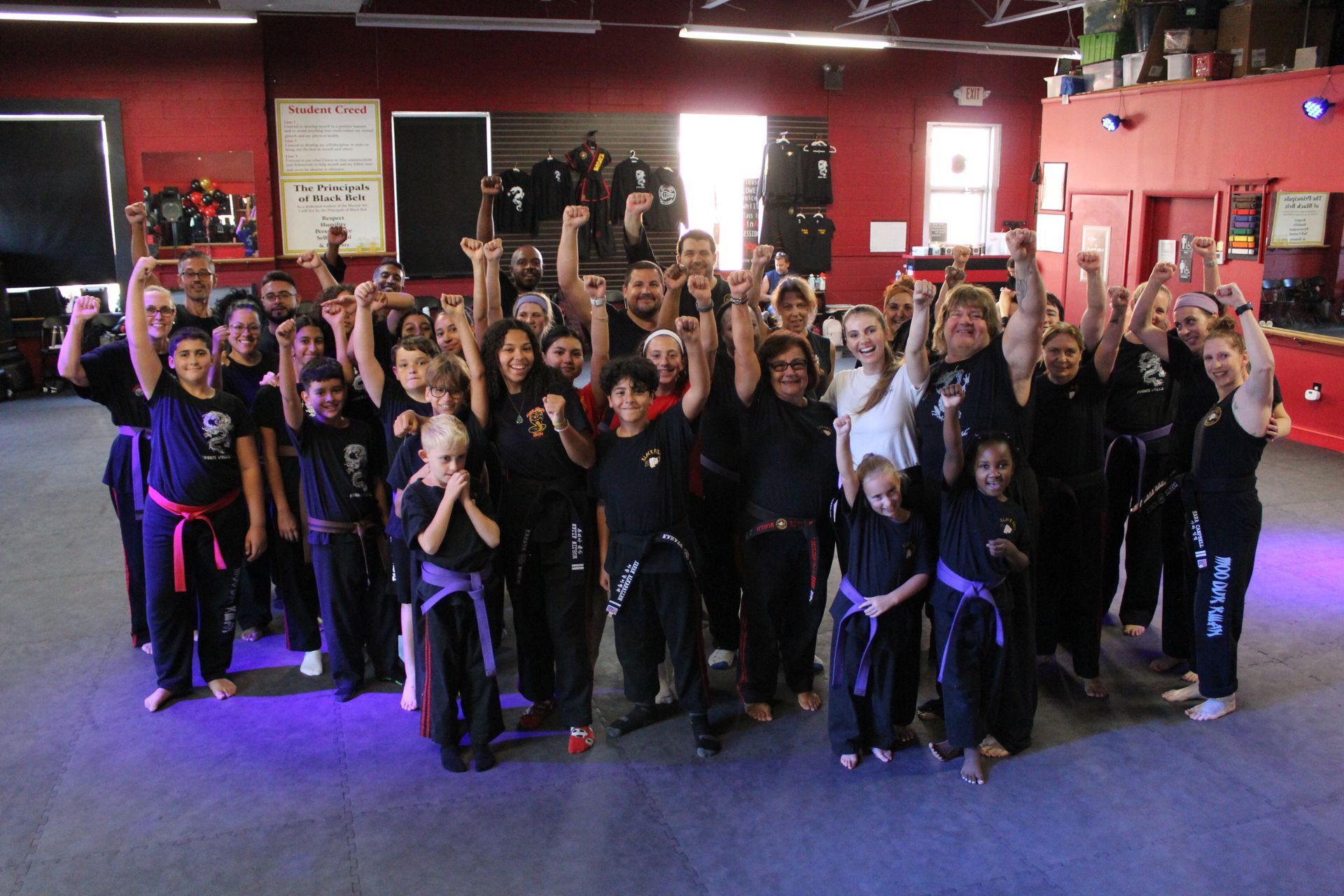
Leadership is not something teens are born with, it is something we build one class at a time through karate.
Teen years can feel like a constant test: tougher classes, bigger social pressure, phones buzzing late at night, and expectations that somehow keep rising. In our dojo, we see how quickly that pressure can either overwhelm a teen or shape a teen, and the difference often comes down to structure, support, and a place to practice staying calm.
That is where karate fits so naturally. It is physical, yes, but it is also a training ground for focus, communication, and character. When teens train consistently, leadership stops being an abstract idea and becomes a set of habits that show up at school, at home, and in the way your teen carries themselves around town.
If you are looking for karate Kenilworth NJ families can trust for real development, our goal is simple: we want your teen to leave class stronger on the inside, not just more skilled on the mat.
1. Discipline Forges Unbreakable Focus
Structure is not strictness, it is freedom
Teens do not usually need more lectures about responsibility. What helps more is practicing responsibility in a place where expectations are clear and consistent. In karate, the routine matters: lining up, bowing in, listening closely, and repeating basics even when the basics are not thrilling. That repetition trains follow through, which is one of the most underrated leadership skills.
We also notice that discipline becomes easier when teens can feel progress. When a student realizes that consistent effort is what made a technique sharper or a stance more stable, discipline stops being a rule and starts being a tool. That shift is huge, and you can often see it in schoolwork and time management.
Focus becomes a skill, not a personality trait
Some teens are naturally organized. Many are not. In our classes, focus is taught like any other skill: you practice it, you get feedback, you try again. When a teen learns to keep their attention on a combination, on footwork, or on a partner drill, that same mental muscle can transfer to studying, test taking, and even conversations that require patience.
For families in Kenilworth, NJ, this kind of focus can be a relief. Between demanding schedules and the pull of distractions, having a consistent space where focus is expected and practiced can help your teen feel more in control of their own day.
2. Belts Build Bold Confidence and Initiative
Confidence that is earned feels different
A lot of teen confidence gets treated like something you either have or you do not. Our experience is the opposite: confidence is built, and karate builds it in small, believable wins. Mastering a new block, remembering a form, improving timing, earning a stripe, preparing for a belt test, all of these moments add up.
Because progress is visible, teens begin to trust themselves. Not in a loud way, not in a show off way, but in a steady way. That steady confidence is what leadership needs, especially when things get uncomfortable or when someone else is counting on you.
Initiative is trained through responsibility in class
As students advance, we give teens chances to step forward in appropriate ways: demonstrating a technique, helping lead warm ups, pairing with newer students during drills, or simply setting the tone with good etiquette. Those are leadership reps. Teens learn how to speak clearly, how to be watched without panicking, and how to correct mistakes without being harsh.
This is also where many parents notice a change at home. A teen who used to avoid taking the lead might start taking initiative with homework, chores, or group projects. It is not magic, it is practice.
3. Mentoring Ignites Empathy and Real Communication
### Leadership is not control, it is service
One of the most inspiring shifts we see is when teens start paying attention to someone besides themselves. In partner drills and mixed level classes, mentoring happens naturally. A teen learns to slow down so a younger student can keep up. A teen learns to explain a technique in a way that makes sense. A teen learns that being helpful is not the same as being bossy.
That kind of empathy matters. Good leaders read the room. Good leaders notice when someone is nervous. Good leaders adjust. Karate gives teens safe chances to build those habits without the social risks that come with school hierarchies.
Communication gets practiced under real pressure
Public speaking can feel intimidating for teens, but leadership requires some version of it. In karate, communication is not only standing in front of a group. It is also using your voice with a partner, asking questions, responding to coaching, and learning to accept correction without shutting down.
We keep communication practical and respectful. Teens learn how to speak up, how to listen, and how to give encouragement that actually helps. Over time, that becomes part of how your teen shows up in everyday life, not just in class.
4. Sparring Sharpens Decision Making and Calm Under Pressure
Thinking fast, safely, and with control
Sparring is where many teens learn the difference between reacting and responding. When a partner moves, your teen has to decide what to do in the moment: create distance, block, counter, reset, or change angle. That decision making happens quickly, but it is not reckless. We emphasize control, respect, and safety, because the goal is learning, not winning.
This is leadership training in disguise. Leaders make decisions with incomplete information. Leaders manage adrenaline. Leaders stay composed. Sparring gives teens a controlled environment to practice those skills and to reflect on what worked and what did not.
Confidence can reduce bullying and conflict escalation
Many parents ask if karate helps with bullying. Our answer is that it can, in a couple of important ways. First, self defense skill and awareness can make a teen feel less vulnerable. Second, the confidence that comes from training can change body language and presence, which can discourage some negative attention.
Just as important, we teach emotional control. When teens feel provoked, the best leadership choice is often to de escalate, to walk away, or to get help from an adult. Karate is not about looking for fights. It is about being prepared, staying calm, and making smart choices when stress hits.
5. Mindfulness Masters Resilience for Modern Teen Life
Stress management is part of training now
Recent years have made teen stress impossible to ignore. Between academic demands, social media pressure, and mental health concerns, a lot of teens feel like they never fully exhale. A good karate class creates a different rhythm: you breathe, you move, you focus on one task, and your mind gets a break from everything else.
We build mindfulness in practical ways. It shows up in controlled breathing, in slowing down to refine technique, and in learning how to reset after a mistake. That reset skill is resilience, and resilience is what helps teens keep going when life is messy.
Resilience means showing up even when it is hard
Leadership is not only about being confident on a good day. It is about consistency on the hard days. Karate teaches teens to keep working when a technique feels awkward, when a belt test is coming, or when they feel behind. Instead of quitting, they learn to problem solve.
Here are a few resilience habits teens tend to develop through consistent training:
• Returning to basics when things feel overwhelming, because fundamentals create stability
• Accepting coaching without taking it personally, which helps in school and future careers
• Setting short, realistic goals between classes so improvement feels manageable
• Managing frustration in a healthy way, rather than exploding or shutting down
• Celebrating progress that is earned, not just outcomes that happen by luck
These habits might sound simple, but in teen life, simple can be powerful.
How Leadership Growth Looks Week to Week
Parents sometimes want to know what changes to expect, and when. Every teen is different, but leadership development often follows a pattern when karate training is consistent and the environment is supportive.
1. Weeks 1 to 4: Your teen learns etiquette, class rhythm, and the basics of self control
2. Months 2 to 4: Confidence grows as techniques become more coordinated and feedback feels less scary
3. Months 4 to 8: Goal setting becomes real through testing prep and measurable improvement
4. Months 8 to 12: Responsibility increases as your teen helps newer students and models good habits
5. Year 1 and beyond: Leadership becomes visible outside the dojo through calmer decisions and stronger follow through
That timeline is not a promise, but it is a realistic way to understand how long term skills are built.
Take the Next Step
If you want a teen program that develops confident, respectful leaders, we have built our approach to do exactly that, with structure, coaching, and a community that notices effort. At Karate World, we see teen leadership grow from small daily choices: showing up, listening, practicing, and learning how to handle pressure with control.
When you are ready, we will help you use the program, the class schedule, and clear goal setting to make progress feel steady and real. If your family is exploring Young karate Kenilworth NJ opportunities that support mental strength as much as physical ability, we are here to guide you.
To choose a time that works for school and activities, you can check the class schedule.