

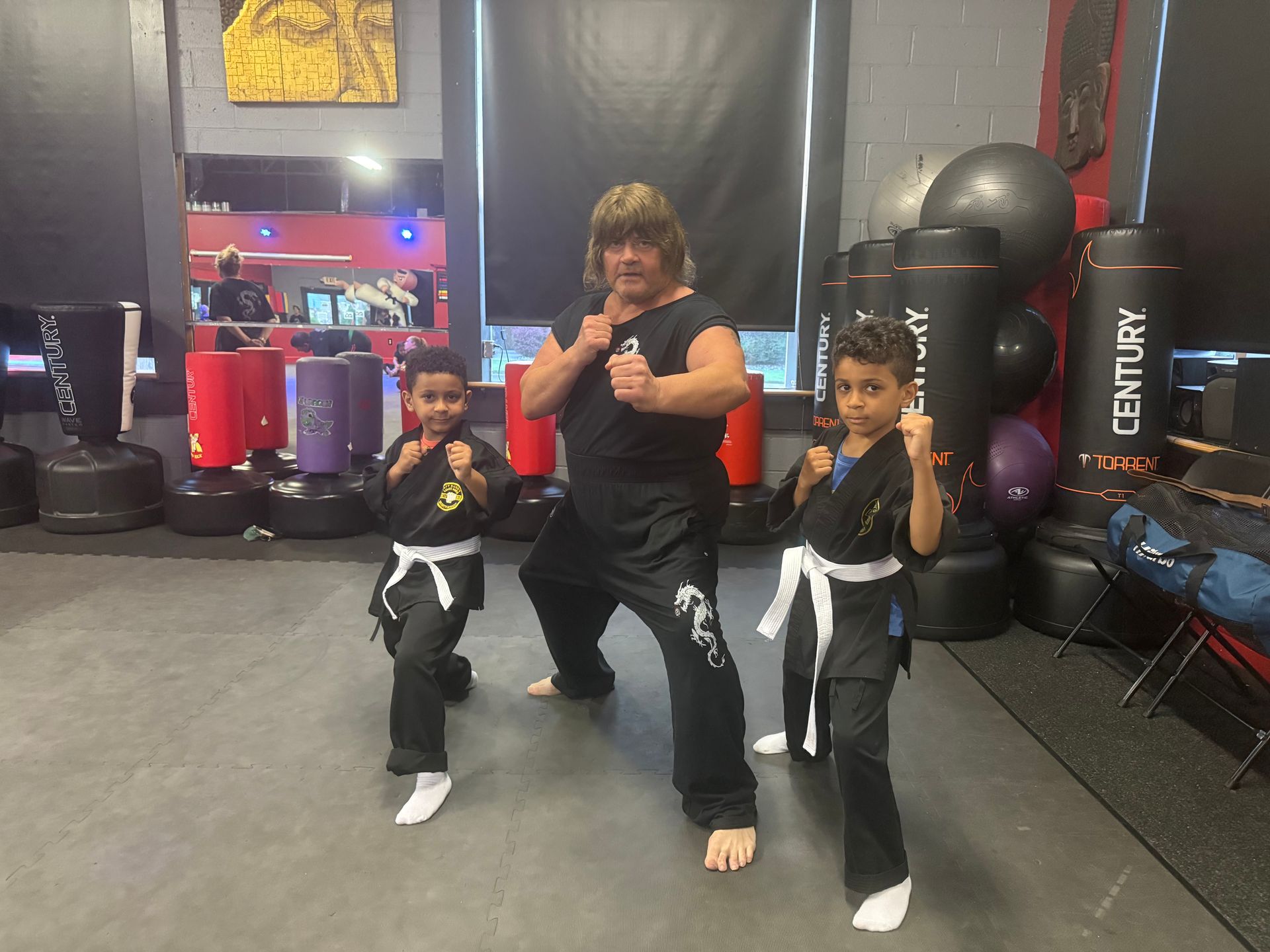
The best part of training is realizing the gains show up in your energy, mood, and focus long before you earn a new belt
Karate is often described as a martial art, but in our Kenilworth community it becomes something more practical: a weekly reset for your body and your mind. Many people first come in looking for fitness or self-defense, then stay because they start sleeping better, handling stress more calmly, and feeling stronger in everyday movement.
We see that “hidden benefits” idea all the time because progress in karate does not only live in the dojo. It shows up when your legs stop burning on the stairs, when your posture improves at your desk, or when you catch yourself breathing steadily in a stressful moment instead of tensing up. Those changes are real, and research from the last few years backs up what students experience: measurable improvements in fitness, resilience, and well-being.
Kenilworth is busy in a quiet way. People juggle commuting, family schedules, and the kind of constant background stress that adds up. Our job is to help you train safely, consistently, and with enough structure that you can feel the results without guessing what to do next.
Why karate feels different from a standard workout
A typical workout can be great for the body, but karate asks your brain to participate just as much as your muscles. You are learning movement patterns, timing, coordination, and decision-making while you build conditioning. That combination matters because it helps you develop skills and fitness at the same time, which tends to keep motivation higher over the long run.
Karate training naturally alternates between intensity and control. One minute you are driving through technique combinations that raise your heart rate, and the next you are refining balance, breathing, and precision. That “switching gears” is one reason many students describe training as stress-relieving instead of draining.
Research on martial arts and combat sports consistently links training to improvements in cardiorespiratory fitness, muscular endurance, flexibility, and body composition when practiced regularly. In other words, it is not just a feeling, it is a physiological adaptation your body makes when you show up consistently.
The physical health benefits people do not always expect
Better heart and lung capacity you can actually notice
Karate includes repeated bursts of movement: footwork, combinations, and controlled drills that keep you moving. Over time, this kind of training supports aerobic capacity and cardiorespiratory fitness. You may notice you recover faster after exertion, and daily tasks start feeling lighter.
In youth athletes, studies show measurable differences like improved aerobic fitness and lower body fat percentage compared with non-athletes. Adults respond to training too, especially when practice is steady and progressive rather than random.
Strength and muscular endurance without “gym-only” movement
Karate builds strength through functional patterns: stances, kicks, strikes, and rotational movement. Instead of isolating one muscle group, you train your body to coordinate strength across hips, core, and upper body.
Muscular endurance is a big deal here. You repeat techniques with control, and you learn how to stay stable even when you are tired. That kind of endurance transfers to real life, from carrying groceries to maintaining posture through a long workday.
Flexibility and joint mobility that comes from technique, not forcing it
Flexibility in karate is not about cranking into a stretch and hoping for the best. The movement itself develops mobility: hip opening for kicks, ankle and knee tracking in stances, and shoulder range for clean technique.
When we train flexibility progressively, you tend to gain usable range of motion. That means your body can access the movement when you need it, not just when you are sitting on the floor stretching.
The “hidden” mental health benefits: resilience, mood, and stress relief
Karate has a reputation for discipline, but the deeper effect is often emotional regulation. Recent studies highlight how martial arts practice can increase ego-resilience, positive emotions, and overall well-being. One reason is that training offers a structured challenge: you face discomfort, work through it, and improve in small steps that add up.
Stress relief in karate is not only about punching and kicking. It is also about focus. When you are practicing a sequence, your attention narrows to breath, stance, and timing. For many adults, that is one of the few times in the week when the mental tabs close for a while.
There is also interesting evidence from related martial arts training showing changes in neurotransmitters like serotonin and dopamine after consistent practice over weeks. Those chemicals play key roles in mood and motivation, which lines up with what many students report: training can leave you feeling clearer and more energized, not just “worked out.”
Why this matters in Kenilworth right now
In and around Union County, people are still working through post-pandemic stress patterns: disrupted routines, more time sitting, and a general sense of being “on” all the time. Karate provides a predictable routine with measurable progress. That structure is surprisingly calming, especially for adults who do a lot of mental work all day.
And for kids and teens, the same structure can support confidence and healthier coping. Research also suggests martial arts programs can reduce bullying tendencies and emotional distress, while improving self-control and social behavior when taught with the right values and supervision.
Adult karate in Kenilworth NJ: what growth looks like after 8 to 16 weeks
If you are searching for Adult karate Kenilworth NJ, you may be wondering what kind of timeline is realistic. While everyone adapts differently, most adults notice early changes in energy and coordination within the first month, especially if training is consistent.
By about 8 weeks, you typically see clearer improvements in movement quality: stronger stances, better balance, smoother combinations, and less tension in shoulders and jaw. That last piece matters, because unnecessary tension is a common stress signal.
By 12 to 16 weeks, many students feel the conditioning shift. Techniques feel less taxing, recovery improves, and the “I can do this” mindset becomes more automatic. Some research timelines around neurotransmitter changes also use a 16-week window with frequent training, which is a helpful reference point for what consistent practice can do.
How we make karate safe and sustainable for beginners and kids
Safety is not a side note. It is part of good coaching. Beginners are often worried about getting hurt, especially if they have not trained in a while or if their child is new to sports. Karate is safe for beginners when we teach progressively and emphasize fundamentals before intensity.
We also pay attention to injury prevention details that newer research calls out, including neck and core strengthening and varied movement to reduce overuse strain. Most avoidable issues come from doing too much too fast or skipping the basics. We do the opposite: we build the base first.
Here are a few ways we keep training sustainable:
• Progressive pacing so you learn mechanics before speed and power
• Emphasis on core stability and posture during stances and transitions
• Warm-ups that prepare hips, ankles, and shoulders for real movement
• Clear expectations for control in partner drills and any contact work
• Coaching cues that help you breathe and stay relaxed under effort
What you will actually do in a typical class
Karate can sound mysterious if you have only seen it in movies. In reality, a well-run class is structured, practical, and surprisingly approachable. Our classes follow a rhythm so you always know what you are working on, even as the content grows more advanced.
A common class flow includes:
1. Warm-up and mobility to prepare joints and elevate heart rate
2. Fundamental technique work focused on stance, balance, and mechanics
3. Combinations and movement drills to build timing and conditioning
4. Skill practice with a partner, done with clear control and supervision
5. Cooldown and brief reset so you leave focused instead of frazzled
That structure helps kids feel secure and helps adults stay consistent. Consistency is where the health benefits live.
The confidence effect: self-efficacy you can use outside the dojo
One of the most practical psychological benefits tied to martial arts training is self-efficacy, the belief that you can handle challenges through effort and strategy. In karate, you prove that to yourself weekly. You miss a technique, adjust, and improve. You feel nervous, breathe, and continue. Those are life skills in disguise.
For adults, that often translates into better boundaries, calmer conflict management, and a stronger sense of capability. For students in school, it can support focus and reduced reactivity. During high-stress periods, mindfulness and emotional regulation are not abstract ideas, they are skills you practice through repetition.
Making it work with real schedules in Kenilworth
Most people do not need perfection to benefit from karate. You need a schedule you can repeat. We recommend starting with a cadence you can realistically maintain, then building from there once your body adapts.
If your goal is general fitness and stress relief, two to three classes per week is a strong start. If you want faster skill development, more frequent practice helps, especially with short bursts of home practice between classes. The class schedule page on the website is the best place to plan around work, school, and family routines.
Take the Next Step
If you want the full picture of what karate can do for your health, you need two things: consistent training and a program that balances intensity with control. That is exactly how we teach at Karate World, and it is why students often notice improvements in mood, stamina, and confidence even before the technical milestones start stacking up.
Whether you are looking for karate Kenilworth NJ for your child, or you are ready to try adult karate Kenilworth NJ for yourself, we will help you start at the right pace, train safely, and track progress you can actually feel week to week at Karate World.