

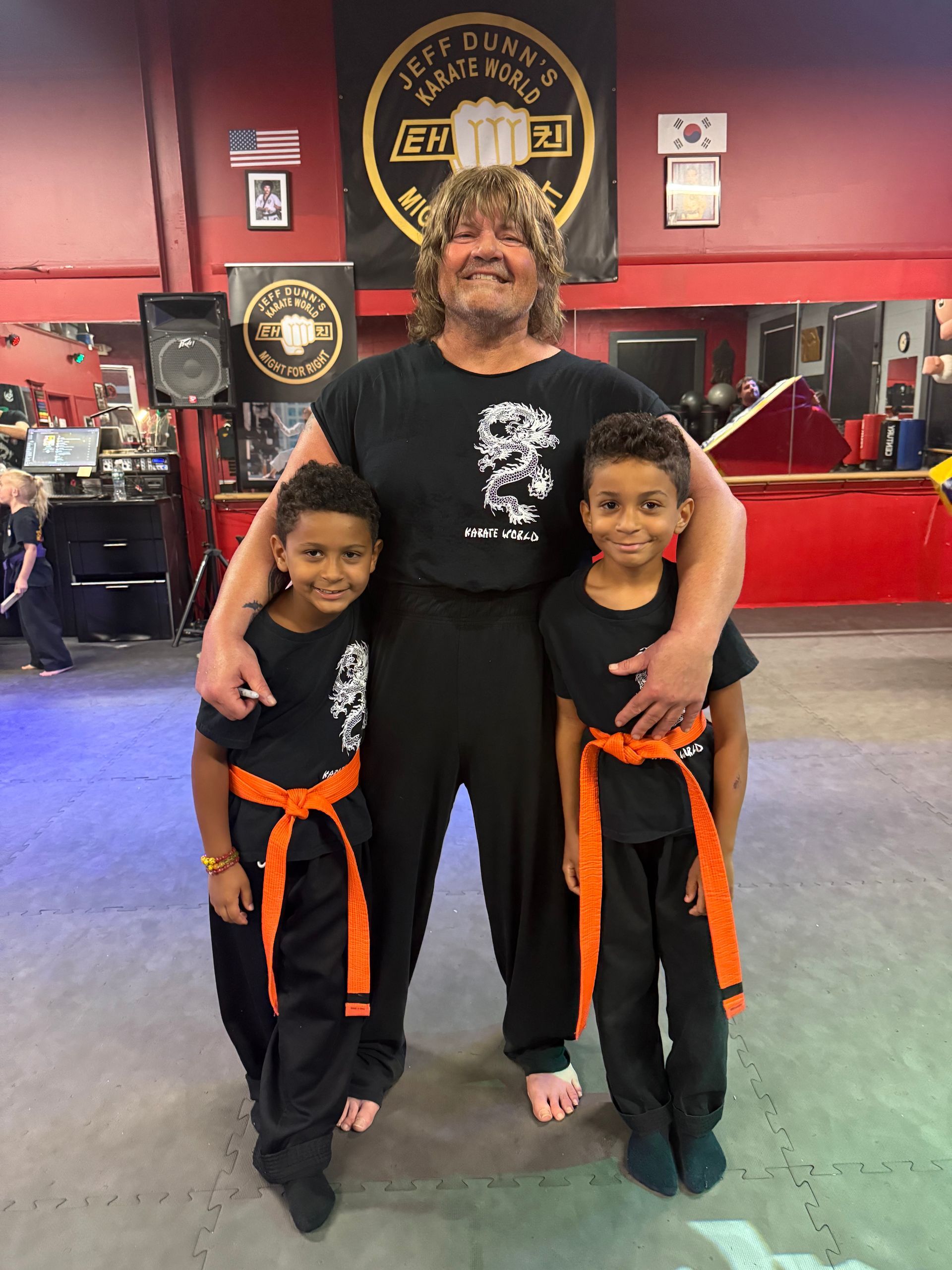
One routine can improve fitness, focus, confidence, and connection for everyone in your household
Finding an activity that truly works for the whole family in Kenilworth is harder than it should be. Schedules are packed, screen time creeps up, and it can feel like everyone is doing something separate even when everyone is home. That is one reason we love karate as a family activity: it gives you a shared routine that is active, structured, and surprisingly practical.
In our dojo, we see families look for more than “a workout” or “a kids class.” You want something that builds character without lectures, strengthens the body without feeling like punishment, and creates real together-time without needing perfect weather. Karate checks those boxes in a way that fits modern family life in Kenilworth, NJ.
And the best part is that you do not have to come in already athletic or already confident. You start where you are, and we build from there, step by step, class by class.
Why karate works so well as a family activity
Family activities usually fall into two categories: fun but inconsistent, or healthy but hard to sustain. Karate sits in the sweet spot because it is both engaging and repeatable. The structure of class, the visible progress through skill development, and the shared language of respect and effort make it easier to keep showing up.
When your child trains and you train too, you stop being a “driver” and become a teammate. You understand what “good stance” means, why breathing matters, and how practice is supposed to feel. That changes dinner table conversations in a quiet way. Instead of “How was class,” you can ask, “Which part felt smoother today,” and you will get a real answer.
Karate also scales across ages. A newer student can work basics and balance. A more experienced student can refine timing, control, and endurance. Everyone is challenged, just at the right level.
A healthier answer to screen time and sedentary routines in Kenilworth
Screen time is not going anywhere, and we are not here to shame anyone. Real life includes homework on laptops, texting, streaming, and the occasional “just one more episode.” The problem is when movement becomes optional. Recent research trends in 2022 to 2024 keep highlighting how sedentary habits are tied to rising childhood obesity and declining overall activity, and many adults still do not meet recommended activity guidelines.
Karate gives your family a built-in appointment with movement. You do not need perfect coordination to start, and you do not need a background in sports. You just need a willingness to practice consistently.
A typical one-hour session can burn around 720 calories, depending on intensity and the person. Beyond calorie burn, we focus on flexibility, posture, stamina, bone density support, and cardiovascular health. For families, that matters because you are not just helping one person “get in shape.” You are building a culture of movement at home.
Physical benefits kids can actually feel (and parents notice)
When kids say they “feel stronger,” we like that, but we also like measurable improvements. Studies show karate training can significantly improve children’s physical fitness, including cardiorespiratory fitness, speed, agility, strength, flexibility, coordination, and balance. In some research, karate programs show particularly strong gains compared with other martial arts formats, which is encouraging for parents who want results and not just activity.
In real terms, those improvements show up like this:
- Your child trips less and moves with more balance on stairs or playgrounds
- Running and changing direction becomes easier because footwork and agility improve
- Posture straightens because stance work demands alignment and control
- Flexibility increases gradually, which helps both comfort and performance in class
We also see a difference in how kids handle effort. Karate teaches that progress is built through repetition. That lesson sinks in physically first, and then it starts showing up in the rest of life.
Confidence, discipline, and social growth that carry outside the dojo
Parents often tell us the biggest changes are not just physical. Confidence, discipline, and social comfort improve in ways that are hard to fake. In parent-reported surveys tied to karate participation, confidence was noted across all surveyed parents, discipline was consistently observed, and many families reported reduced shyness and stronger public speaking comfort. Reports also included improved self-worth and better peer interactions, with a large percentage noting that children made more friends.
We think this happens because training gives kids a safe way to practice being seen. You stand in line. You take turns. You speak up when you are called on. You learn to lose your balance, correct it, and try again while others watch. That is a life skill disguised as a drill.
Karate also supports self-control. Practicing technique with control teaches kids that strength without discipline is not the goal. Over time, that can reduce impulsive behavior and help with emotional regulation, which is something many families in Kenilworth are actively looking for right now.
Executive function and academics: the hidden advantage
Families usually come in for confidence, self-defense, or fitness. Then something else happens: focus improves. There is growing evidence that martial arts like karate can boost executive functions such as working memory, attention, inhibition, and cognitive flexibility. Those are the mental skills that help your child follow multi-step directions, shift between tasks, and resist distractions.
In studies comparing martial arts practitioners with children in team sports or sedentary groups, martial arts participation is often linked with better academic performance and school marks. That makes sense when you see how class is run. Students listen, respond, adjust, and repeat. They learn to manage frustration. They practice staying calm while trying something difficult. Those habits translate.
We never promise grade changes, because school is complex. But we do promise that our training supports the mental discipline that school requires, and many families appreciate that connection.
Karate and anti-bullying skills without turning kids into fighters
Bullying is a concern in every community, including Kenilworth. Families want kids to be safe and confident, but also respectful and controlled. Karate helps by building presence, boundary-setting, and awareness.
We teach students to carry themselves with calm posture and clear attention. That alone can reduce the chance of being targeted. We also reinforce respect, self-control, and non-violent problem solving as core values, because the goal is not to “win” a conflict. The goal is to avoid it when possible and handle it appropriately when it is not.
For many students, the biggest shift is internal. When you feel capable, you do not feel the need to prove anything. That steadiness can change how kids interact with peers.
Why adults should train too (even if you feel out of shape)
We hear it all the time: “I am not flexible,” “I am too busy,” “I will slow the class down.” Adult training is designed for real adults with real schedules. You do not need a fitness prerequisite, and you do not need to be fearless. You just need to start.
Adult karate Kenilworth NJ searches often come from parents who sit in the waiting area and think, “Maybe I should do something for me too.” We agree. Karate offers a full-body workout, stress relief, improved coordination, and practical self-defense fundamentals. It also helps posture and mobility, which matters if you spend your day at a desk or driving from place to place.
Mentally, adult training can be a reset. You focus on one task at a time. You move. You breathe. You finish class tired in a good way.
Training together changes the family dynamic in a good way
When families train, something subtle happens: you start encouraging each other in the same language. You notice effort, not just outcomes. You begin to respect the process.
A parent might struggle with a kick at first, and a child sees that adults learn by practicing too. A child might feel nervous about speaking up, and a parent models calm breathing and trying again. That shared experience builds trust.
We also find that training together reduces intimidation for kids. When your parent is on the mat too, the dojo feels familiar faster. And when kids see adults practicing basics with patience, it normalizes being a beginner.
What to expect in our family-friendly class structure
A good family program has to be organized, safe, and welcoming. Our approach keeps everyone moving while still giving clear instruction and correction.
Here is what you can usually expect from a class experience:
- A structured warm-up that supports flexibility, balance, and injury prevention
- Fundamental techniques practiced in a controlled way, with attention to form
- Drills that build coordination and timing without rushing students past basics
- Partner work introduced gradually, with clear rules and supervised control
- Cool-down and reflection so students leave feeling grounded, not chaotic
We keep classes focused, because focus is part of the training. And yes, we keep it upbeat too. Progress should feel serious, not grim.
How families get started and stay consistent
Consistency is where results come from, but families need a plan that fits school nights, work demands, and everything else that pops up. We recommend starting simple and building momentum. Many studies that show cognitive and motor benefits use regular practice around two hours per week, and that is a realistic target for many households.
To make the first few weeks easier, we encourage a straightforward start:
1. Pick two weekly class times that feel realistic, not “perfect”
2. Arrive a little early so your child can settle in and you are not rushing
3. Focus on showing up, even if the day was messy and energy is low
4. Track small wins like improved posture, better listening, or calmer reactions
5. Adjust the plan after a month based on what your family can sustain
You do not need to overthink equipment at first. Start with comfortable training clothes, learn the basics, and let the routine develop naturally.
Why karate Kenilworth NJ families keep coming back year-round
Kenilworth weather is not always friendly to outdoor activities, and winters especially can make routines fall apart. Karate is one of those “set it and forget it” family habits, in a good way. You come inside, you move, you learn, you sweat a little, and you leave with a sense of progress.
We also see families appreciate the belt system because it gives kids a clear roadmap. It is not instant gratification, but it is visible progress, and that can be motivating for students who struggle with long-term goals.
Most importantly, our dojo becomes a steady place in a busy week. Adults get stress relief and fitness. Kids get structure and confidence. Families get shared time that actually feels meaningful.
Take the Next Step with Karate World
If you want one activity that supports fitness, focus, confidence, and family connection, our programs at Karate World are built for that. We keep training structured and welcoming, so you can start as a beginner and still feel like you belong from day one.
Karate can become a weekly anchor for your household in Kenilworth, and we would love to help you experience that in a way that fits your schedule and your goals at Karate World.
If you are curious about adult karate training or family enrollment details, come visit us today.