

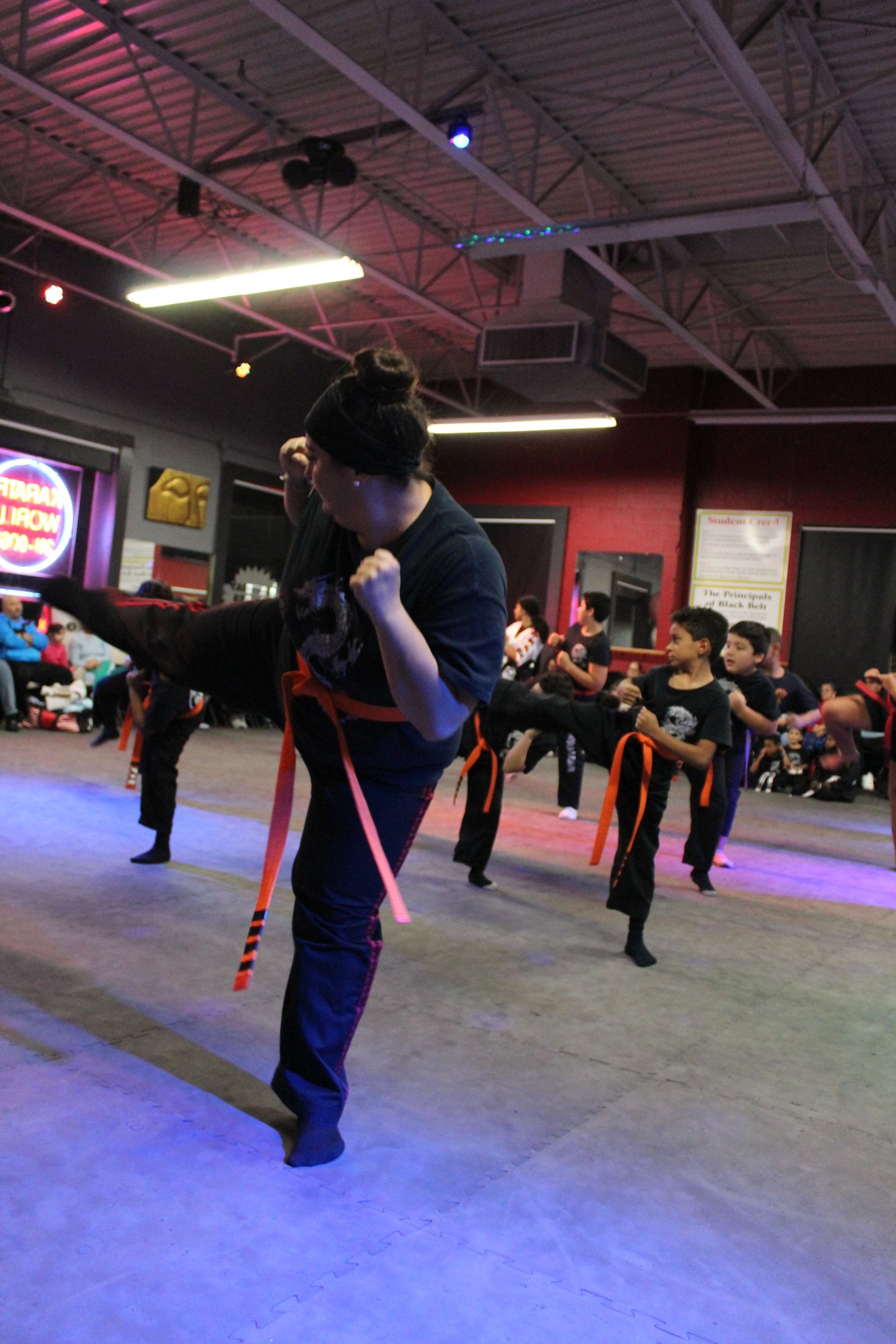
The right kind of structure can turn extra energy into real confidence and steady focus
If you are looking at kids and thinking, why is it so hard to get your child to stick with anything right now, you are not alone. Between school pressure, busy afternoons, and screens that never stop calling for attention, it is common for kids to feel scattered, unsure, or quick to shut down when something feels challenging.
This is one reason so many Kenilworth families ask us about karate. Done the right way, karate is not just about kicks and punches. It is a consistent system that teaches kids how to listen, try again, manage frustration, and speak up with calm confidence.
In our Kenilworth, NJ classes, we see the same pattern again and again: when kids train with a clear plan, supportive coaching, and small goals that add up, confidence starts showing up in everyday life. Focus improves too, not because we lecture kids about attention, but because the training quietly requires it.
Why confidence and focus are connected in childhood
Confidence and focus are not separate traits that magically appear on different days. In real life, your child often needs focus to build confidence, and confidence to stay focused. When kids cannot concentrate long enough to understand instructions, they fall behind. When they feel behind, they stop trying. And when they stop trying, confidence drops.
Our karate classes are built to break that loop. We use clear routines, repeatable drills, and achievable targets so your child can stay engaged long enough to earn real progress. That progress creates proof. Proof is what confidence is made of.
A big reason martial arts helps is that we do not rely on motivation alone. We rely on consistent practice and simple expectations. Kids do not need to feel ready to participate. We show them how to participate first, and readiness follows.
How belt progression builds real confidence (not hype)
Confidence that lasts usually comes from competence. Kids can sense the difference between empty praise and genuine progress. Belt systems work because they turn growth into something visible and trackable. Your child learns a skill, practices it, refines it, and then demonstrates it.
When kids test for a new belt, the moment means something. It is not random. It is earned. That sense of earned achievement often spills into schoolwork, friendships, and even how kids carry themselves in public.
We also like belt progression because it teaches patience. Kids learn that improvement has steps. You do not jump from beginner to expert. You stack small wins, one class at a time, until the wins feel normal.
Focus is trained through repetition, precision, and timing
A lot of parents ask a very specific question: does karate really improve focus for kids with short attention spans? Our answer is yes, because focus is not a personality trait. It is a skill, and skills can be trained.
Karate requires kids to pay attention in several ways at once. They have to watch a demonstration, listen to cues, manage body control, and adjust details like stance width or hand position. That kind of precision is not passive. It is active concentration.
Kata practice is a big part of this. Kata is a structured sequence that demands memory, timing, and control. Over time, kids get better at staying with the sequence even when something distracts them. That is one of the most practical forms of focus training we can give kids, because it is measurable and repeatable.
Research and parent feedback line up with what we see: kids who train consistently often show improvements in attention span, reaction time, and executive functions like working memory and inhibition. Parents also report better follow through at home and fewer meltdowns when tasks get tough.
What a typical kids class looks like (and why it works)
When you check the class schedule, you will notice we keep sessions age appropriate and structured. Kids do best when the routine is familiar but still interesting. We balance energy and order so kids can move, learn, and reset.
Here is the general rhythm we follow:
• Warm ups that build coordination, balance, and body awareness without exhausting kids right away
• Technique drills that teach fundamentals and reinforce listening skills through short, clear repetitions
• Kata practice to sharpen memory and concentration while building calm under pressure
• Partner work or controlled sparring concepts to build courage, timing, and respect for boundaries
• Cool down and quick reflection to reinforce what improved and what to work on next class
This format is not accidental. It trains confidence through achievable challenge, and it trains focus through repetition and detail.
A simple timeline: when parents usually notice changes
Every child is different, but patterns are real. With consistent attendance, many families notice changes in a surprisingly practical way: homework becomes less of a battle, morning routines get smoother, and kids bounce back faster after corrections.
A helpful timeline we often share looks like this:
1. Weeks 1 to 4: Kids learn the routine, feel safer in the room, and start following group directions more reliably.
2. Months 1 to 3: Confidence starts showing up as better posture, stronger voice, and willingness to try in front of others.
3. Months 3 to 6: Focus and self control typically improve as drills and kata become more familiar and kids can self correct.
4. Beyond 6 months: Discipline becomes more internal. Kids begin setting goals, handling frustration better, and taking pride in effort.
Parent surveys often report meaningful confidence gains within months of starting martial arts, and one commonly cited figure is that 87% of parents notice increased self confidence after consistent training. That aligns with what we hear in our lobby conversations, the quick updates after class, and the occasional message about a teacher noticing improved behavior at school.
Confidence comes from doing hard things safely
Kids do not become confident because everything is easy. They become confident because they learn how to handle difficulty without panic. In karate, we intentionally create small challenges that feel doable with effort: holding a stance longer, remembering a longer kata, trying a new technique in front of the group, or staying calm during partner drills.
This matters for shy kids especially. Over time, the room becomes a place where your child can practice being seen. Not in a performative way, but in a steady, normal way. We often hear that students who used to avoid speaking up begin answering questions louder and making eye contact more naturally. One trend we have seen reflected in broader parent feedback is that many families notice shy kids becoming more comfortable with public speaking and self expression after about a year of practice.
Focus improves because kids learn how to reset
A big part of focus is knowing what to do after losing focus. Kids get distracted. Adults do too. The difference is whether your child has a practiced reset button.
We build reset moments into class constantly. We line up. We bow in. We return to ready stance. We pause, breathe, and listen. These repeated cues act like anchors. Over time, kids start using similar anchors outside class: taking a breath before answering, pausing before reacting, or returning attention to a task after drifting.
Recent interest in youth mental health has brought more attention to how martial arts supports stress reduction. Kata can feel almost meditation like for kids once they know it well. Controlled breathing and steady rhythm help the nervous system settle, which makes attention easier.
Discipline without aggression: what we actually teach
Some parents worry about aggression. It is a fair concern. But karate, when taught responsibly, is not about picking fights. It is about control, boundaries, and respect.
We set clear expectations from day one: techniques are for training, self defense, and controlled practice, not for showing off. Kids learn that self control is part of being skilled. Studies also support this: martial arts training is linked with reduced aggression and improved emotional well being when programs emphasize discipline and respect.
This is also where anti bullying skills come in. Your child learns to stand tall, speak clearly, and set boundaries. The goal is not to turn kids into fighters. The goal is to help kids feel less helpless, because helplessness is often what bullies look for.
Why this matters in Kenilworth, NJ right now
Kenilworth families are juggling a lot. Union County kids face real academic expectations, packed schedules, and social pressure that starts earlier than most of us would like. On top of that, screen time can quietly erode patience and attention. You might see it at the dinner table or when you ask your child to transition away from a device.
That is why kids programs with structure are in demand locally. Parents are looking for something that builds discipline and resilience without piling on more stress. In our space, we aim to give kids a place where the rules are clear, the coaching is supportive, and progress is tangible.
If you have been searching phrases like Young karate Kenilworth NJ or karate Kenilworth NJ, it is usually because you want more than an activity. You want a positive change you can actually see at home.
Getting started is easier than most parents expect
Beginning karate should not feel intimidating. We keep the process straightforward, and we meet your child where your child is. Some kids show up bursting with energy. Some walk in quietly and watch everything. Both are normal.
We offer a free trial class so you and your child can experience the environment before making a commitment. Uniforms are easy to handle, and we explain what your child needs, what to expect, and how to build a consistent routine that fits your week.
For most kids, training two to three times per week is a sweet spot. It is frequent enough to build momentum, but not so much that it overwhelms school and family life.
Take the Next Step
If confidence and focus are what you want most for your child, we can help you build those skills with a plan that feels steady and realistic. At Karate World, our kids curriculum uses structure, belt goals, kata, and supportive coaching to turn effort into visible progress, and that progress tends to follow kids into school and home life.
When you are ready, we will help you choose a starting point based on age and experience, then guide your child step by step through training that builds calm attention and earned confidence. Karate World is here in Kenilworth to make that journey clear, safe, and genuinely motivating.
Ready to see how our youth karate classes feel in person?