

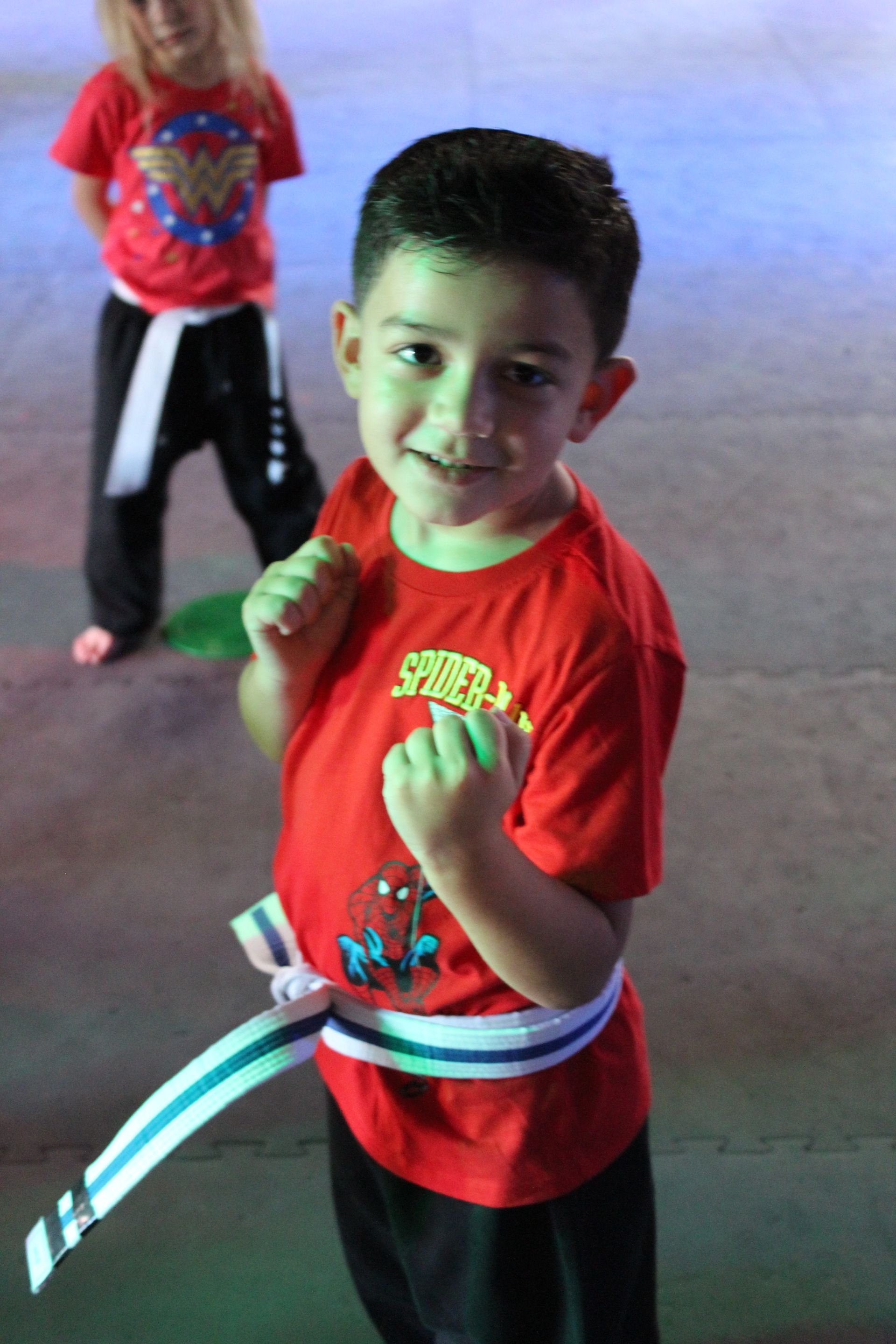
Youth Karate gives kids a place to move, breathe, and reset - then carry that calm back into school and home.
Stress shows up differently in every child. For some kids in Kenilworth, it looks like worry before a test. For others, it comes out as frustration, tears, shut-down silence, or bouncing off the walls after a long school day. We built our Youth Karate program to give kids a practical way to handle those feelings, not just “talk about them” but actually work through them in the body.
When kids train consistently, we often see a shift that parents describe in simple terms: “He’s calmer,” “She’s less reactive,” “He can pause before he explodes,” “She’s sleeping better.” That is not magic. It is what happens when structured movement, breathing, focus, and supportive coaching become part of your child’s weekly routine. If you are searching for Youth Karate Kenilworth families can rely on for more than just kicks and punches, you are in the right place.
Why stress hits kids hard in Kenilworth (and why movement helps)
Kenilworth is a tight community, but kids still carry big loads. Homework, sports tryouts, social drama, screen time, and the pressure to “keep up” can stack up fast. And because kids are still learning emotional skills, stress rarely comes out as a neatly labeled feeling. It comes out as behavior.
Physical training helps because it gives stress somewhere to go. Exercise supports the body’s natural mood regulation by releasing endorphins and lowering tension. But what makes Youth Karate different is that we do not only “burn energy.” We teach kids how to notice what they feel and choose what to do next, even when they are annoyed, nervous, or overwhelmed.
That skill, choosing a response instead of reacting, becomes useful everywhere: in a classroom, in a car with siblings, at a birthday party, or during a tough conversation.
The three ways Youth Karate builds emotional control
1. Repetition trains the brain to steady itself
Karate is built on repeated fundamentals: stances, blocks, strikes, and patterns. Repetition can sound boring on paper, but for kids it becomes grounding. The body learns a sequence, the mind locks in, and scattered thoughts quiet down. When a child is stressed, the nervous system loves predictable structure.
Over time, we see students become less “all over the place” because their practice teaches them how to return to a stable baseline. Even a child who struggles with focus can learn to stay with a task when the task is clear, coached, and practiced step-by-step.
2. Breathing gives kids a tool they can use anywhere
Stress often triggers shallow breathing. That can make anxiety feel even bigger. In class, we coach students to use breathing to settle down and regain control. It is simple, but it is powerful: a steady inhale, a controlled exhale, shoulders relaxed, eyes forward.
We like breathing techniques because your child can use them without needing permission or special equipment. A few calm breaths before a spelling test, during a conflict, or when feeling “too much” can shift the whole moment. That is one reason Youth Karate Kenilworth NJ parents often tell us the benefits show up outside the dojo faster than expected.
3. Discipline turns emotion into choice, not explosion
Discipline is not harshness. In our classes, discipline means: you listen, you try, you respect others, and you keep going even when it is challenging. Kids learn that feelings are real, but feelings do not have to drive the bus.
When a student gets corrected, loses balance, or cannot do a technique yet, we guide them through it. We do not shame them for frustration. We show them how to reset and try again. That is resilience in real time, and it is one of the most valuable emotional skills a child can build.
What stress relief looks like inside a typical class
Parents sometimes ask what we actually do in class that helps with anxiety or emotional blow-ups. Here is the honest answer: it is the combination of movement, focus, and structure, repeated week after week.
A typical session (often 45 to 60 minutes) includes skill practice that gets the heart rate up, then moments that demand control. Kids learn to switch gears: from high energy to quiet attention, from fast drills to careful technique. That ability to shift states is a big part of emotional regulation.
You might notice your child sweating, smiling, and working hard, but also standing still when asked, waiting their turn, and responding with respect. Those are not “nice extras.” Those are emotional skills being trained.
Common emotional challenges we help kids work through
Youth Karate is not therapy, and we will never pretend it replaces professional support when that is needed. But it can be a strong, consistent foundation that supports a child’s mental wellness. In Kenilworth, we commonly work with kids who are navigating:
• School anxiety, including test stress and performance pressure, by practicing calm breathing and steady routines
• Big frustration and quick anger, by learning to pause, listen, and try again instead of escalating
• Low confidence, by building competence through measurable progress and clear goals
• Social stress, by practicing respectful communication, teamwork, and leadership in a structured setting
• Restlessness and difficulty focusing, by giving the mind a “job” through repetition and coached attention
What matters is not that a child never feels stress. What matters is that your child learns what to do when stress shows up.
Why Youth Karate can improve school focus and behavior
Teachers and parents often notice changes after a few weeks of steady training. It makes sense. Karate asks kids to follow directions, track details, and control their bodies. Those same skills support classroom success.
We also use goal-setting in a way kids understand. Belt progression gives students a clear path: show up, practice, improve, earn the next step. That kind of progress tracking builds motivation and self-esteem, especially for kids who feel stuck in other areas.
In our experience, kids often become more mature in how they handle correction. Instead of shutting down when something is hard, they learn to treat effort as normal. That mindset shift can be huge for school, sports, and friendships.
Safety and suitability for beginners ages 5 to 12
If you are wondering whether Youth Karate is safe for a beginner, especially a younger child, we get it. Parents in Kenilworth want an activity that builds confidence without putting kids in risky situations.
We teach skills progressively. That means we start with fundamentals, balance, coordination, and basic technique. We emphasize control, respect, and age-appropriate training. When we introduce partner drills, we do it with clear rules, supervision, and a focus on learning, not “winning.”
Our goal is for your child to leave class feeling stronger, not beat up. A good sign after class is not just excitement, but a steady kind of tired: the calm that comes from having worked hard and stayed focused.
How Youth Karate supports kids socially, not just emotionally
Stress is not only internal. A lot of kids feel pressure socially: fitting in, handling teasing, dealing with conflict, or managing friend drama. In class, students learn how to be part of a group without needing to be the loudest person in the room.
We build a culture of respect. Kids practice taking turns, encouraging teammates, and listening to instruction. Over time, many students become more comfortable speaking up, asking for help, and leading warm-ups or drills. Those small leadership moments are confidence builders.
And for kids who feel isolated, just having a consistent place to belong can be a relief. Community is a real stress buffer, especially when school feels intense.
What to expect in your first 4 to 6 weeks
Parents often want a timeline. While every child is different, many families notice stress-related improvements within about a month of consistent training. Confidence can build even faster, because kids feel progress right away when they learn new techniques.
Here is a realistic view of what the early phase usually looks like:
1. Week 1: Your child learns the class routine, meets instructors, and starts building comfort with structure
2. Week 2: Basic techniques start to feel familiar, and focus improves because expectations are clear
3. Weeks 3 to 4: You may notice better emotional recovery after setbacks and fewer “big reactions”
4. Weeks 5 to 6: Confidence increases as skills sharpen, and your child often takes more pride in effort
Consistency is the secret. One class can feel great. Regular classes create change.
Practical details parents ask about: schedule, commitment, and progress
Most families do best with one to two classes per week, especially at the start. That pace gives kids enough repetition to grow while keeping life manageable with school and family schedules.
We make it easy to plan by keeping the class structure consistent. Kids know what to expect: warm-ups, fundamentals, skill-building, drills, and cool-down. That predictability is comforting for anxious kids and helpful for kids who struggle with transitions.
If you want specifics on days and times, the class schedule page on the website is the best place to start. It is updated so you can plan around homework, dinner, and everything else that fills a Kenilworth week.
Take the Next Step with Karate World
Stress does not disappear as kids grow. If anything, the pressures can change shape, from grades to friendships to bigger responsibilities. The good news is that emotional regulation is teachable, and Youth Karate gives kids a structured way to practice it with their whole body, not just in theory.
At Karate World, we focus on turning stress into skill: steady breathing, calm focus, respectful habits, and confidence that your child can feel in everyday moments. If you are looking for Youth Karate Kenilworth families can use as a practical tool for resilience, we would be glad to help you get started.
Take your next step in training by joining a martial arts class at Karate World.