

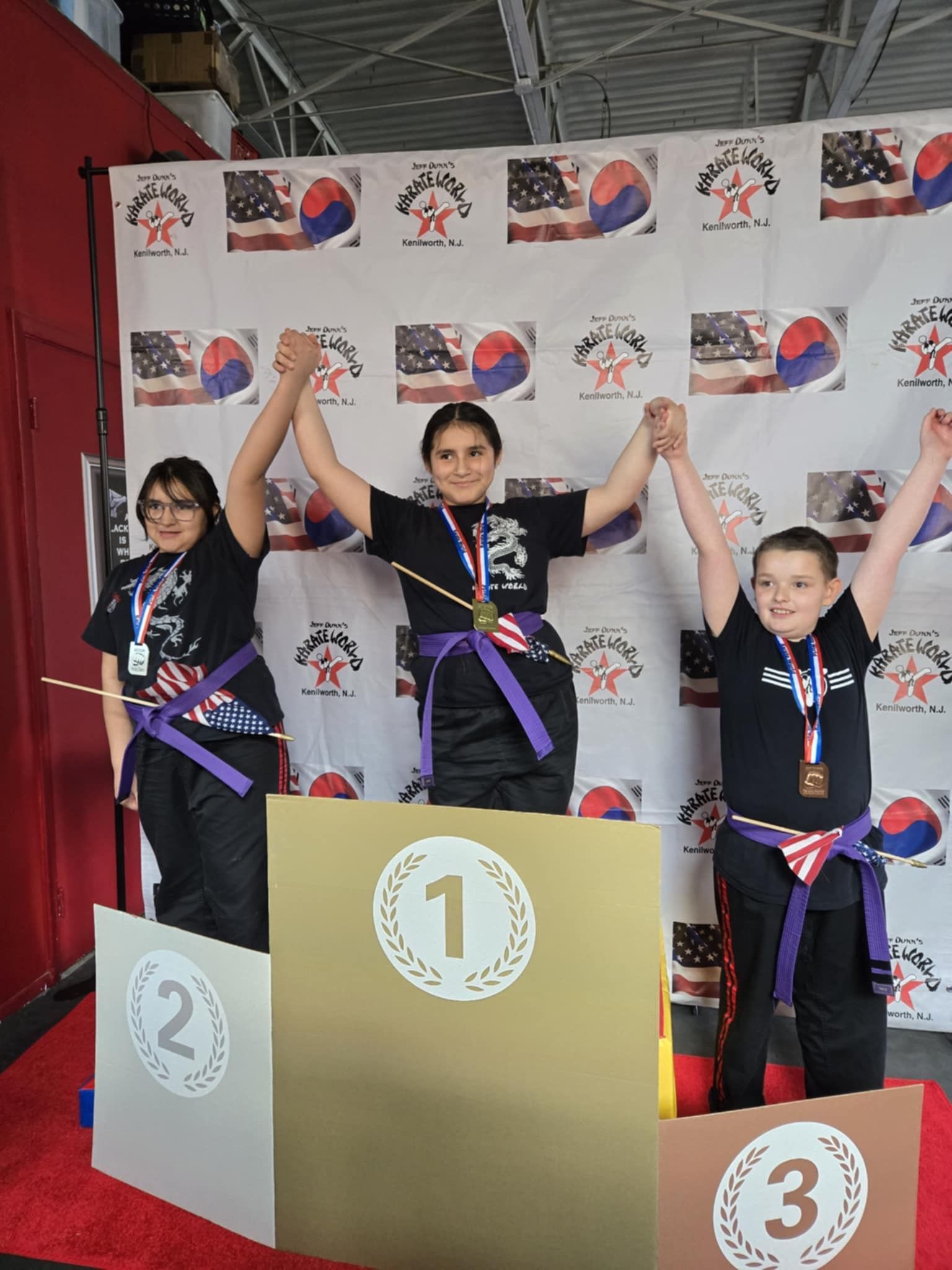
Youth Karate builds the kind of focus, follow-through, and confidence that shows up on report cards.
Parents in Kenilworth, NJ are always looking for something that helps kids do better in school without adding more pressure at home. In our experience, Youth Karate is one of the most practical ways to support academic success because it trains the same “school skills” kids rely on every day: attention, self-control, listening, and sticking with a task even when it feels hard.
There’s real research behind this connection, too. A rigorous one-year school-based karate intervention with hundreds of children found small but meaningful improvements in academic achievement, alongside benefits in conduct and fitness. We like that finding because it matches what we work on in class: structured training that’s consistent, specific, and skill-based, not random activity.
If you’re considering Youth Karate Kenilworth families can actually fit into real schedules, the big question becomes: what exactly transfers from the mat to the classroom? Let’s break it down in a way that’s easy to picture in your own child’s day.
The school benefits start with how training is structured
Karate class is not free play. It’s not “burn off energy and hope for the best.” It’s a guided practice where kids learn to pay attention, respond to cues, and repeat key movements with purpose. That structure matters because school is structured, too.
When kids walk into our youth classes, we set expectations right away: line up, listen, respond, try again, keep hands to yourself, respect the space. That might sound basic, but those are the same behaviors teachers are reinforcing all day. Youth Karate Kenilworth NJ students get frequent reps at these habits, and repetitions are where change happens.
Consistency beats intensity for academic gains
A common misunderstanding is that kids need more “challenge” to improve. Sometimes what kids really need is consistency. Our approach is built around steady progress, routine, and a clear path forward. That can feel calming for kids who get overwhelmed at school, and it can feel grounding for kids who struggle with follow-through.
In practical terms, we’d rather see a student show up and work through the fundamentals week after week than try to do everything at once. That steady work is the same thing that improves reading, math, and writing over time. It’s not flashy, but it works.
Youth Karate strengthens focus in a way kids can actually use at school
Focus is not just “pay attention harder.” For kids, focus is a skill. It includes listening, filtering distractions, and staying on one task long enough to finish. Youth Karate teaches kids to bring attention back to the present moment over and over again. In class, we give one instruction, then the next, and kids learn to track the sequence.
This matters because classrooms are full of distractions. A pencil drops, a friend whispers, a door opens. Kids who have practiced attention in a physical setting often get better at noticing distraction without following it. It’s not perfect (kids are kids), but the direction is clear.
Small moments of attention add up
In training, we ask students to hold a stance, keep a guard up, or follow a count. Those are tiny moments of concentration, but they stack. That stacking effect is part of why physical skill training can support cognitive skills like attention and processing speed.
And there’s a second layer: when kids learn they can improve focus through practice, school feels less mysterious. Focus becomes something you build, not something you either “have” or “don’t have.”
Discipline and time management: the hidden academic advantage
If we had to pick one reason Youth Karate supports academics, it might be discipline. Not harsh discipline, not fear-based stuff. We mean the day-to-day ability to do what you said you’d do. Show up. Try. Finish. Respect the process.
The belt system reinforces that in a kid-friendly way. Students learn that progress is earned through consistent practice and meeting standards. That lesson transfers cleanly to homework, studying, and long-term projects.
Here are a few discipline habits Youth Karate tends to build, especially when families keep training steady:
• Following multi-step directions without needing constant reminders, which supports classroom routines and homework completion
• Practicing patience when results take time, which helps with challenging subjects like math or reading fluency
• Taking responsibility for preparation, like getting gear ready and arriving on time, which mirrors keeping school materials organized
• Recovering from mistakes quickly, which reduces shutdowns during tests and assignments
• Respecting boundaries and expectations, which supports better behavior and fewer classroom disruptions
That list might look simple, but for a lot of families, those are the exact pressure points during the school week.
Confidence that changes how kids participate in class
Academic success isn’t only about “knowing the answers.” It’s also about raising a hand, asking for help, and staying engaged when something feels confusing. Youth Karate builds confidence in a very concrete way: kids learn skills, they test, they earn recognition, and they see proof that effort creates progress.
That confidence can shift a child’s identity from “I’m not good at this” to “I can get better if I keep working.” We see students carry that mindset into school, sometimes without even realizing it. A child who used to avoid challenge might start taking it on, one small step at a time.
A note for shy kids and anxious kids
Not every child wants to be “the loud confident one.” That’s not the goal. We’re more interested in calm confidence: the ability to stand tall, make eye contact, and try something new without falling apart if it’s not perfect. That kind of self-assurance helps kids handle presentations, group work, and even the social side of school, which can affect academics more than people think.
Goal-setting that feels real (because kids can see it)
Kids often struggle with long timelines. “Study now for a test next week” can feel abstract. Karate makes goals visible and close. There’s a curriculum. There are skills to master. There are belt tests and clear expectations. Kids learn to connect today’s effort to tomorrow’s outcome.
This is one reason Youth Karate can support motivation. Students practice setting a goal, working toward it, and getting feedback along the way. That process is basically the academic process, just in a different outfit.
How we teach kids to break big goals into doable steps
When a student wants to move up, we don’t just say “work harder.” We help create a path: improve stance, sharpen technique, remember combinations, practice at home, show better control. That teaches a planning mindset.
If you’ve ever watched your child freeze up on a big school project, you know how valuable planning can be. The ability to break down tasks is a learned skill, and it can be trained.
Physical fitness supports learning more than most families expect
The mind and body aren’t separate systems. Physical activity supports cognitive function through better sleep, stress reduction, and increased blood flow to the brain. Martial arts adds something extra: coordination, balance, and controlled movement.
The research we referenced earlier also found improvements in physical fitness like cardiorespiratory fitness and balance during a structured karate intervention. That’s important because better fitness often means better energy regulation. Kids who can regulate energy tend to sit, listen, and work more effectively.
Stress and anxiety are real barriers to school success
A lot of kids carry stress. Sometimes it’s academic pressure, sometimes it’s social, sometimes it’s just the pace of life. Youth Karate gives kids a safe outlet for that stress, but it also teaches emotional regulation: breathe, reset, try again.
When kids learn to calm down after a mistake in sparring practice or during a drill, that skill can show up during tests and presentations. It’s not magic. It’s practice under pressure, in a controlled environment.
Why structured training matters more than “just staying active”
It’s tempting to think any activity helps grades. Movement helps, sure, but the biggest carryover often comes from structured, sport-specific programming with clear expectations and consistent coaching. That’s what makes karate different from unstructured play.
In our youth program, we keep classes organized and progressive. Kids learn fundamentals first, then build on them. We correct details. We encourage effort. We also keep the environment respectful and predictable, which helps kids feel secure enough to focus.
If you’re searching for Youth Karate Kenilworth options, it’s worth paying attention to how class is run. The structure is the feature. It’s what teaches kids to listen, learn, and improve.
What a typical youth class looks like (and why it helps in school)
Parents sometimes ask what their child will actually do in class, and the answer matters because the “how” is where the academic benefits come from. Our youth classes generally follow a rhythm that supports learning: warm-up, skill instruction, repetition with feedback, and focused practice.
A simple way to picture it is like a great classroom lesson, but physical. There’s demonstration, guided practice, correction, and a chance to succeed through effort.
Here’s the kind of learning sequence we build into Youth Karate:
1. Clear instruction and demonstration so students know what “good” looks like
2. Short practice rounds that keep attention sharp and reduce drifting
3. Immediate feedback so kids can adjust in real time
4. Repetition with small improvements, which builds patience and grit
5. A wrap-up that reinforces what was learned and what to practice next
That sequence is basically a blueprint for how kids learn best in school, too.
Helping Kenilworth kids carry skills from the dojo into the classroom
Transfer doesn’t happen automatically. We support it by using consistent language and expectations that kids recognize at school: focus, respect, effort, self-control, and responsibility. We also encourage families to connect the dots at home in small ways.
For example, if your child is working toward a belt test, that’s a great moment to talk about studying for a quiz. Both require practice, reviewing what you know, and showing what you can do on a specific day. Kids understand that kind of comparison.
Youth Karate Kenilworth NJ families often tell us they notice changes that are subtle but meaningful: less arguing about homework, better morning routines, and more willingness to attempt hard assignments without melting down. Those are quality-of-life improvements, and they support grades more than any quick study hack.
Take the Next Step
Building academic success is rarely about one big breakthrough. It’s usually the result of small habits repeated: focusing, following directions, managing emotions, and staying consistent. Youth Karate gives kids a place to practice those habits in a way that feels active and rewarding, not like more school after school.
When you’re ready to explore Youth Karate with a program built for Kenilworth kids, we’d love to help you get started at Karate World with a clear path, supportive coaching, and a class schedule that works for families.
If you’re curious about martial arts training, join a class at Karate World and begin learning from the ground up.