

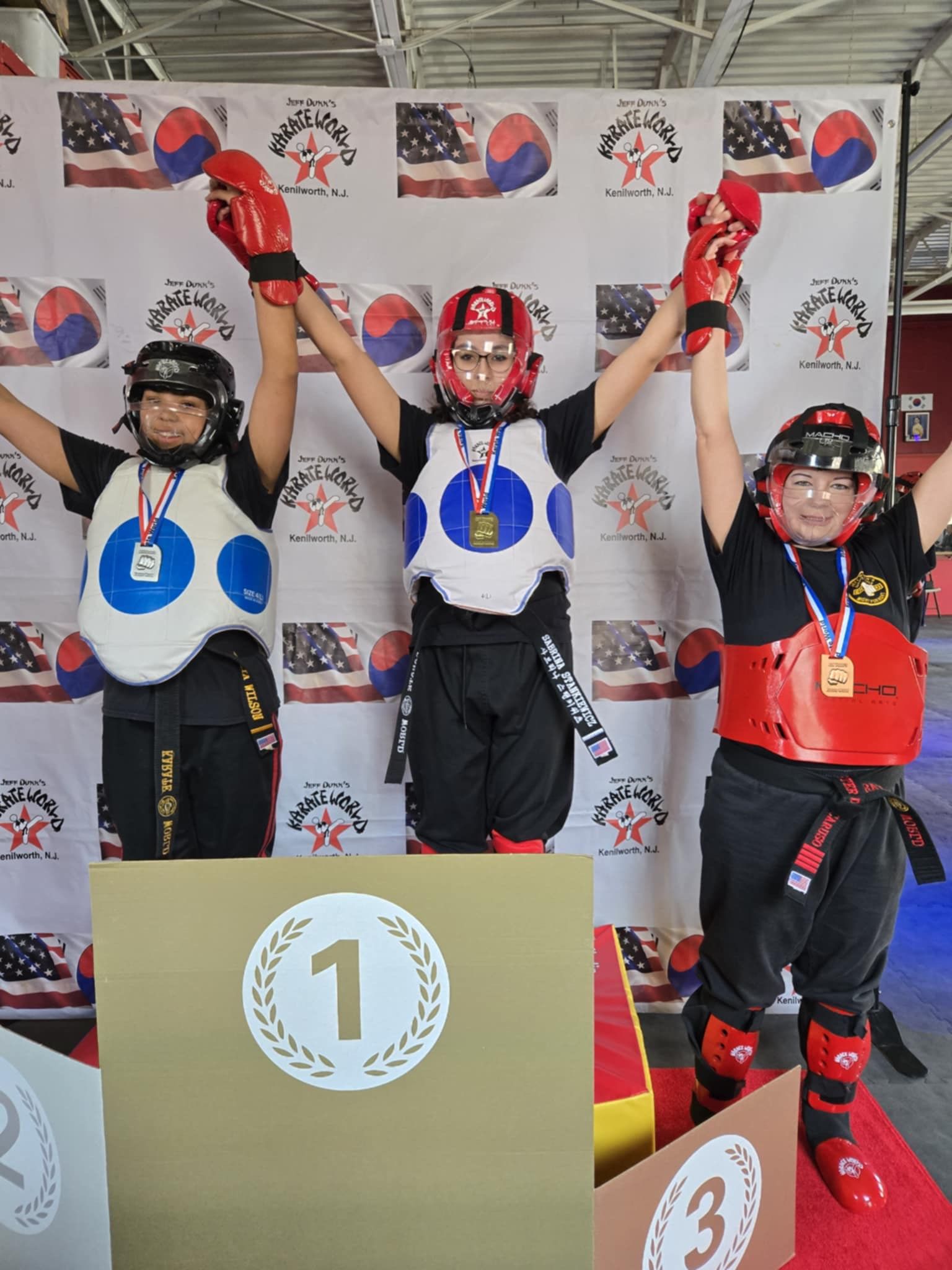
A clear belt path turns big goals into small wins your child can feel every week.
Youth Karate is one of the few after school activities where progress is built into the experience. Your child starts with simple basics, earns visible milestones, and gradually learns how to stay calm under pressure, even when something feels new or tricky. We see it all the time: kids who begin quietly end up speaking louder, standing taller, and taking pride in steady improvement.
Parents in Kenilworth often ask how belt progression actually works, how long it takes, and what the testing process looks like. We built this guide to answer those questions in plain language, so you can understand what your child is working toward and how you can support the journey at home.
Just as important, we want you to know what belt rank really means in our youth program. Belts are not simply colors. Each one represents a specific set of skills, habits, and character goals that your child demonstrates consistently in class.
How youth belt progression works and why it matters
Belt progression gives kids structure. In Youth Karate, that structure becomes a roadmap: learn a skill, practice it safely, show control, and then earn the next step. The value is not only physical technique. The bigger win is learning to work through frustration, follow instructions, and keep going when something does not come instantly.
A good belt system also protects kids from being rushed. If a student advances too quickly, confidence can actually drop because the material starts to feel confusing. Our approach is to build real foundations first, so every new belt feels earned and exciting, not stressful.
In Kenilworth, families are juggling school demands, sports, and busy schedules. Belt goals help kids stay motivated without needing long lectures at home. When your child knows exactly what to practice this week, training becomes manageable and momentum stays strong.
Our youth belt roadmap from white belt to black belt
Most youth karate systems begin at white belt and progress through multiple colored belts before black belt. We follow that familiar structure, but we keep expectations age appropriate and focused on safety, control, and life skills, not just memorizing moves.
Below is a simple overview of what progression typically looks like in our Youth Karate Kenilworth NJ classes. Exact requirements vary by age and readiness, and we always confirm goals with your child directly in class so the target stays clear.
Typical youth belt sequence
1. White belt
2. Yellow belt
3. Orange belt
4. Green belt
5. Blue belt
6. Purple belt
7. Brown belt
8. Junior black belt track and black belt readiness
That sequence helps kids understand that advancement is a process. There is always a next step, but it is never a sprint.
What your child learns at each stage
Belt ranks can sound mysterious at first, so here is what we focus on as students move through the levels. Think of it as building a house: we lay the foundation, then add stronger and stronger layers.
White belt: confidence through basics
White belt is where most kids begin, and it is often where the biggest emotional shift happens. We teach stance, balance, and simple strikes and blocks with careful coaching. Kids learn how to line up, listen, and participate without feeling overwhelmed.
We also introduce simple kata early, because forms teach patience. When a child repeats a short kata and finally remembers the order, that success is real and visible, and you can almost see the pride on the walk back to the car.
Yellow and orange belts: coordination and control
At these levels, kids start linking techniques together. We add more combinations, basic self defense ideas, and improved footwork. Control matters more than power. A clean technique with focus is always better than a wild swing.
We also work on respectful partner practice. Kids learn personal space, safe distance, and how to train with kindness while still taking the activity seriously.
Green and blue belts: kata detail and problem solving
As students move into green and blue, forms become more detailed and performance expectations rise. We start looking at posture, breathing, timing, and strong stances that do not collapse under pressure.
This is also where kids learn a useful lesson: progress is not always straight upward. Some weeks feel easy, other weeks feel clunky. We coach kids to stay steady and keep showing up, because consistency is part of the skill.
Purple and brown belts: readiness, responsibility, and composure
Advanced colored belts are where kids learn composure. We refine techniques, increase complexity, and introduce more demanding drills that build conditioning and mental sharpness. Students also practice leadership behaviors, like helping newer kids follow the warmup or staying focused even when the room is busy.
If your child reaches this stage, the changes usually show up at home too: better follow through, calmer reactions, and a stronger sense of what it means to earn something over time.
Black belt: what it actually represents for youth
A youth black belt is not a finish line. It is a serious milestone that reflects long term commitment, solid fundamentals, and maturity in training habits. We care about readiness, not rushing. When a child earns black belt, we want the rank to mean something to your family, not just to us.
Kata and belt goals: the hidden engine of progress
Kata is one of the most powerful teaching tools in Youth Karate Kenilworth classes because it trains the mind and body at the same time. A form forces a child to remember sequences, control rhythm, and stay present. When kids get distracted easily, kata becomes a built in focus exercise that feels like movement, not homework.
We use belt goals to keep kata practical and motivating. Rather than handing kids a long list and hoping it sticks, we set clear expectations for what to improve next. That might be tightening a stance, adding sharper turns, or finishing each movement with balance.
Over time, kata becomes a mirror. It shows kids where they rush, where they hesitate, and where they have grown. That feedback loop is a big reason Youth Karate works so well for confidence.
Belt testing in Kenilworth: timing, readiness, and expectations
Testing is exciting for kids, and we keep it positive and organized. Belt testing happens periodically rather than constantly, because students need time to absorb skills. In many youth programs, testing occurs a few times per year, and that cadence supports steady growth instead of rushed advancement.
Readiness is more than knowing techniques. We look for consistency in behavior, effort, and control. A student who can perform the moves but cannot follow basic safety rules is not ready yet, and that is okay. We would rather protect your child’s confidence than push a promotion that creates pressure later.
If your child feels nervous before testing, that is normal. We coach kids to treat nerves as energy. The goal is not perfection. The goal is demonstrating preparation, respect, and composure.
How long does it take to earn each belt
Families naturally want a timeline. The honest answer is that belt progression depends on attendance, home practice, and a child’s development pace. Many students can reasonably expect several months per belt, and longer as ranks get higher and expectations increase.
In Youth Karate, the most important factor is consistency. Two classes per week is a common rhythm for building skill without burnout. If your child trains regularly, practices a little at home, and stays engaged, progress becomes very predictable.
If you want a simple guideline, here is a practical way to think about time:
• Early belts: faster gains because fundamentals are new and exciting
• Middle belts: steady gains as technique gets cleaner
• Advanced belts: longer time because maturity, detail, and leadership matter more
What to practice at home without turning it into a battle
Home practice should feel light. A few minutes done consistently beats a long session done once in a while. We suggest keeping practice short enough that your child finishes feeling successful.
Here are a few home practice ideas that support Youth Karate without making your living room feel like a second classroom:
• Ask your child to teach you the first part of a kata and explain one detail they are improving
• Set a timer for five minutes and have your child practice stances and balance, slow and controlled
• Review a small set of blocks or kicks with focus on form, not speed
• Use a simple goal like keeping hands up or finishing each move in a strong stance
• Celebrate effort and consistency more than “getting it right”
When kids feel ownership, they practice more. When they feel corrected constantly, they avoid it. We aim for the first option.
Safety and confidence: what parents should expect in class
Safety is non negotiable in our youth program. We teach control first, we supervise closely, and we match drills to age and skill level. Beginners are not thrown into intense contact. We build skills gradually so kids can enjoy training while learning real self defense concepts.
Confidence grows when a child feels capable and supported. In a well run class, kids learn how to handle mistakes, how to listen under pressure, and how to reset after a rough attempt. Those are life skills, and that is why Youth Karate Kenilworth NJ families often see benefits beyond the dojo: improved focus, better body awareness, and stronger self control.
Common questions from Kenilworth families
What should my child wear to the first class?
Comfortable athletic clothes are perfect. Once you enroll, a uniform becomes part of the experience, and kids usually love that sense of belonging.
What age is appropriate to start?
Many youth martial arts programs begin around ages 3 to 5 with beginner friendly classes and continue through teens. The best start age is less about the number and more about readiness to follow simple instructions and participate safely.
Will my child be pressured to test?
No. We treat testing as a milestone, not an obligation. When a student is ready, we make that clear and support the process.
Is Youth Karate only for athletic kids?
Not at all. We regularly see kids who are shy, uncoordinated, or unsure at first grow into the training. Progress is the point.
Take the Next Step
If you want a Youth Karate program where belt progression is clear, patient, and tied to real growth, we would love to help. At Karate World, we use belt goals, kata, and supportive coaching to help kids in Kenilworth build confidence one class at a time, without rushing what should be earned.
When you are ready, the next step is simple: check the class schedule, try a class, and see how your child responds to the structure and energy in the room. We will answer your questions honestly and help you understand exactly where your child fits in the progression.
Turn what you learned here into real progress by joining a martial arts class at Karate World.